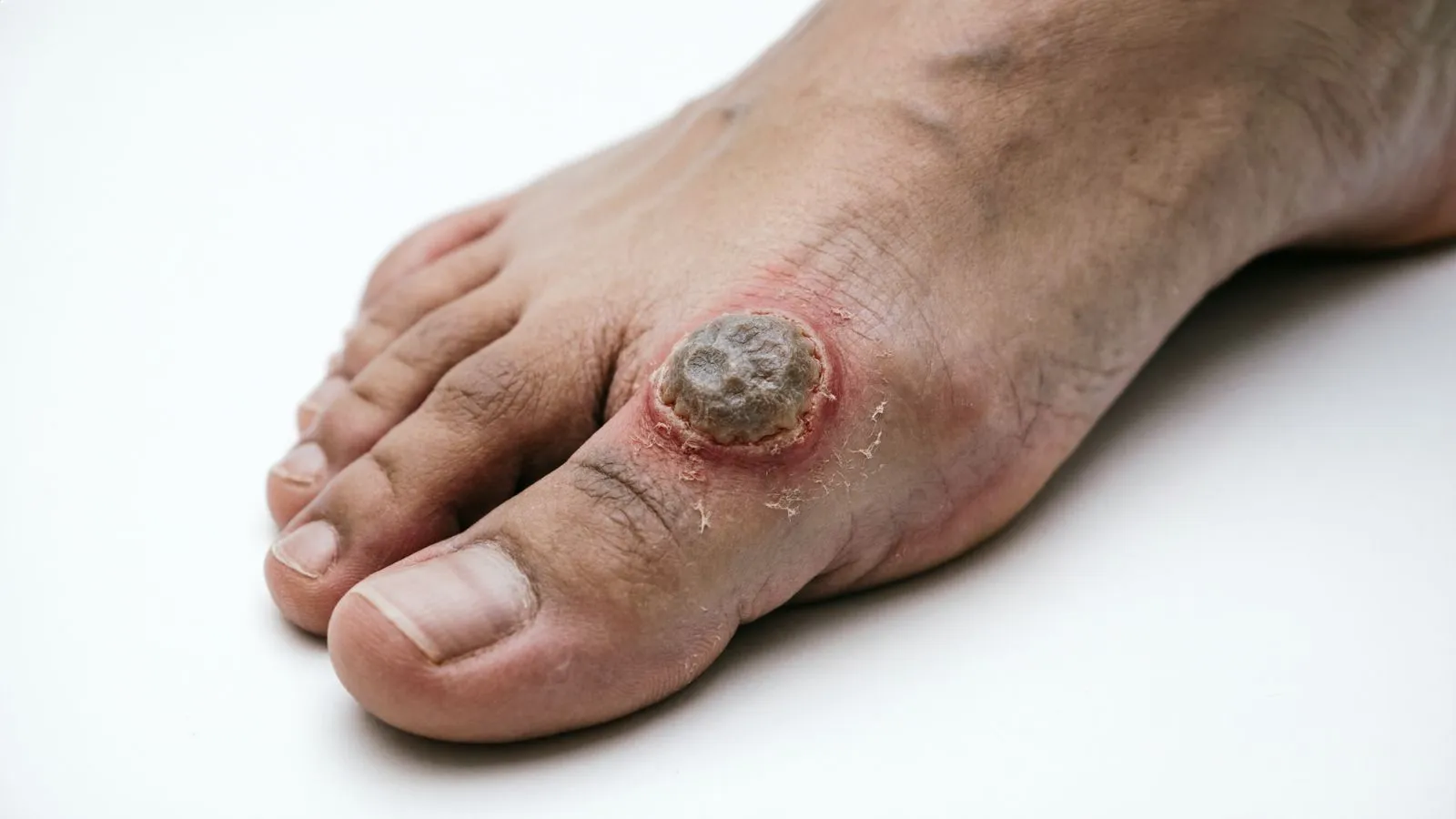
A hard spot on your foot can make walking uncomfortable, but its appearance may not reveal the cause. A callus develops from repeated pressure or friction, while a plantar wart is caused by HPV. Knowing the differences can help you recognize warning signs and choose the right next step.
Quick Answer: Callus or Wart?
A callus usually has thick, hardened skin with natural skin lines still visible. A plantar wart may interrupt those lines and contain tiny black dots. Warts can also spread, while calluses cannot.
Key Differences Between a Plantar Wart and a Callus
Both commonly appear on the heel or ball of the foot, where pressure is greatest.
| Sign | Plantar Wart | Callus |
| Cause | HPV infection | Pressure or friction |
| Appearance | Rough growth, sometimes with black dots | Broad patch of thickened skin |
| Skin lines | Often interrupted | Usually continue across the area |
| Pain | May hurt when pinched from the sides | Often hurts with direct pressure |
| Contagious? | Yes | No |
These signs are helpful, but they are not foolproof. A wart can grow beneath thickened skin, making it difficult to distinguish from a callus just by looking.
Why Do Plantar Warts and Calluses Develop?
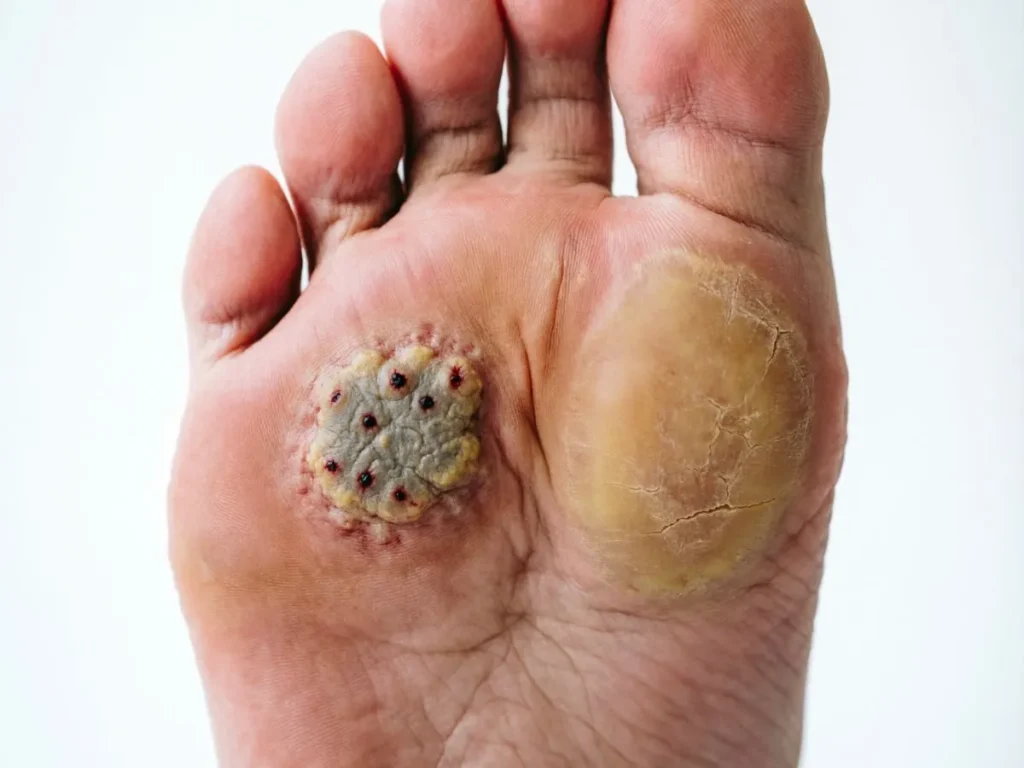
Plantar warts develop when HPV enters the skin through tiny cuts or breaks. The virus can spread through direct contact or contaminated surfaces, including floors in communal changing areas. Warts may take weeks or months to appear after exposure.
Calluses form when the skin responds to repeated pressure or rubbing. Tight shoes, long periods of standing, and the way you walk can all contribute. Unlike warts, calluses are not caused by a virus and cannot spread to other people.
When Should You See a Doctor?
A hard spot that looks harmless may need medical attention if it keeps getting worse. Arrange an assessment if it bleeds, changes in size or colour, becomes increasingly painful, returns after treatment, or makes walking difficult.
Seek prompt medical care if you notice spreading redness, warmth, swelling, pus, or an open sore. Severe pain or an inability to walk warrants urgent assessment.
If you have diabetes, poor circulation, reduced feeling in your feet, or a weakened immune system, speak to a healthcare professional before trying to remove the growth yourself. Even a small injury can lead to complications when healing is impaired.
How Are They Diagnosed?
A doctor, podiatrist, or dermatologist will examine the spot and ask about your symptoms. They may gently remove some thickened surface skin to look for features such as tiny blood vessels or interrupted skin lines. If the growth looks unusual or the diagnosis remains uncertain, further examination and occasionally a biopsy may be needed.
Getting the diagnosis right matters: treating a wart as a callus, or vice versa, can irritate the skin and delay appropriate care.
Treatment: What Works?
For plantar warts: Some disappear on their own, but this can take months or longer. Salicylic acid and professional freezing, known as cryotherapy, are common treatments. Stubborn warts may need specialist care.
For calluses: The first step is to reduce the pressure causing them. Better-fitting shoes, cushioning, and moisturising creams can help. A podiatrist may carefully remove excess hardened skin and recommend footwear changes or orthotics if pressure is likely to return.
Important Safety Tips
- Don’t cut or dig into the growth. Sharp tools can cause wounds and infection.
- Be careful with medicated removers. If you have diabetes, poor circulation, or reduced foot sensation, avoid salicylic acid wart or callus products unless a healthcare professional specifically recommends them.
- Don’t treat an uncertain growth as a wart. The wrong product can damage healthy skin.
- Limit possible wart spread. Avoid picking the area, wash your hands after touching it, don’t share foot-care tools, and wear footwear in communal changing areas.
- Take pressure off the spot. Wear comfortable shoes and avoid activities that make the pain worse.
A healthcare professional can help you choose treatment based on the diagnosis and your medical history.
FAQs
Can a callus turn into a plantar wart?
No. A callus develops from pressure or friction; a plantar wart is caused by HPV. One does not turn into the other.
Are plantar warts contagious?
Yes. HPV can spread through contact with infected skin or contaminated surfaces. Avoid picking warts or sharing foot-care tools.
Can I treat a callus or wart at home?
Some cases can be managed with appropriate home care, but don’t cut or dig into the skin. If you’re unsure what the growth is or have diabetes, poor circulation, or reduced foot sensation seek medical advice before treatment.
Conclusion
A callus usually develops from pressure, while a plantar wart results from an HPV infection. Although a few visible signs can help you tell them apart, looks can be misleading. If the spot changes, becomes painful, or doesn’t improve, have it checked rather than risking the wrong treatment.
Related Articles
- Donor’s Cost or Adjusted Basis: What Should You Report?
- Faced vs. Unfaced Insulation: Which Should You Use?
- Appendix Left or Right? Location, Pain and Warning Signs

Mignon Fogarty is an experienced English grammar and writing expert specializing in grammar, word usage, and clear American English. At EduNexxt, her focus is making grammar simple, accurate, and practical.
 Bryan Garne
 William Strunk