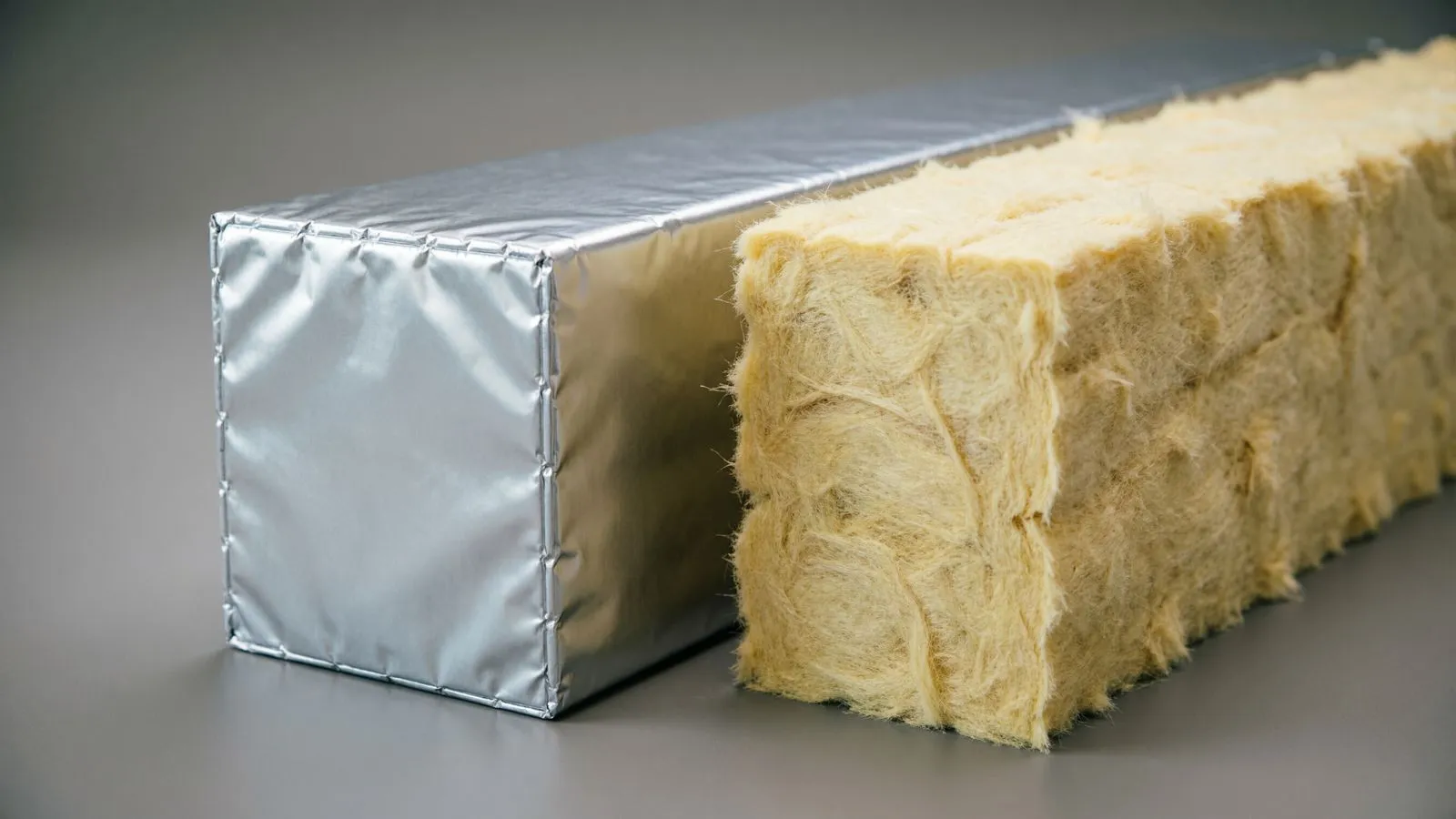
Choosing the wrong insulation can leave your home less energy-efficient and create unwanted moisture problems. But should you choose faced or unfaced insulation? Faced insulation has an attached paper or foil layer, while unfaced insulation has no facing. Understanding the difference helps you choose the right insulation for your walls, ceilings, or floors.
Quick Answer:
Choosing between faced and unfaced insulation? Faced insulation has a built-in vapor retarder that helps control moisture, while unfaced insulation is often used in interior walls, between floors, or when adding insulation to existing layers. Both can provide the same R-value, so the right choice depends on where you’re installing it and how your home manages moisture.
Faced vs. Unfaced Insulation: Key Differences
| Feature | Faced Insulation | Unfaced Insulation |
| Appearance | Paper or foil backing | No attached facing |
| Moisture control | Facing can slow vapor movement | No attached vapor-retarding layer |
| Common uses | Walls, ceilings, and floors where specified | Interior walls, attics, and additional layers |
| Installation | Often has flanges for stapling | May need separate support |
| Sound control | Depends on the insulation and assembly | Commonly used in interior partitions |
When Should You Use Faced Insulation?
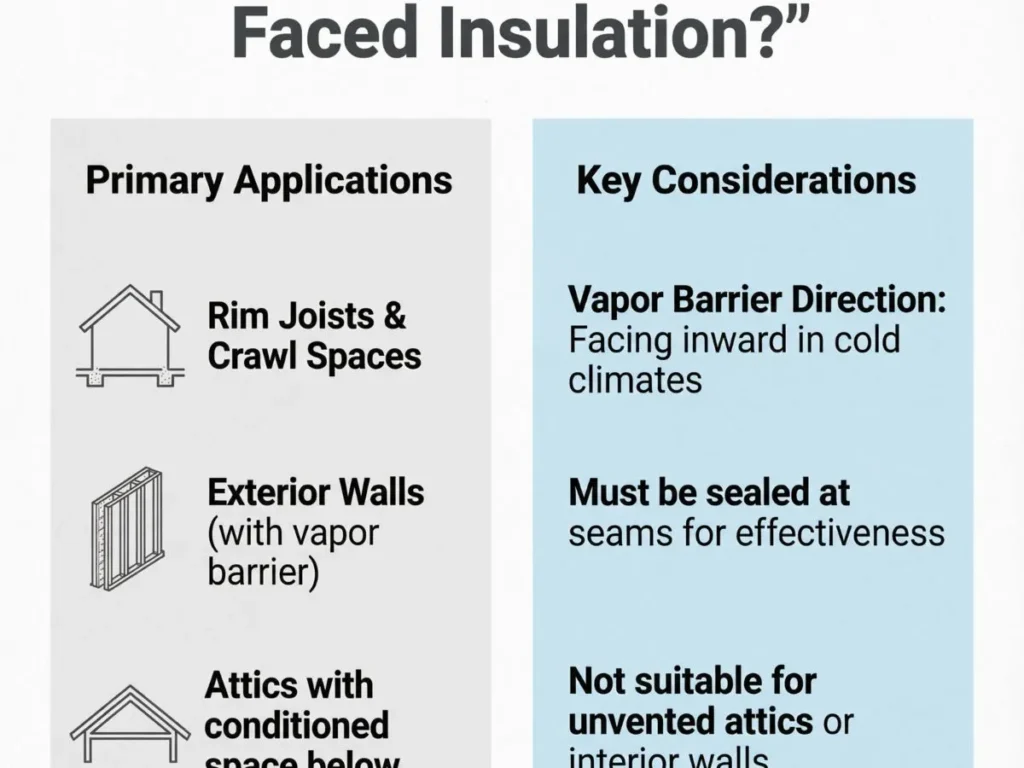
Faced insulation is commonly installed in exterior walls, ceilings, and floors when the building assembly calls for a vapor retarder. The attached layer helps slow moisture vapor from moving through the structure.
In many cold climates, kraft-faced insulation is installed with the facing toward the heated interior. However, this isn’t a universal rule. Hot, humid climates and certain wall assemblies may require a different approach. Always check the product instructions and local building codes before installation.
When Is Unfaced Insulation Better?
Unfaced insulation works well in interior walls and between floors, where it can help reduce heat transfer and limit sound transmission. It’s also useful for adding insulation in attics when the existing assembly allows it.
Without attached facing, the material is easy to trim around pipes, wiring, and irregular spaces. It can be friction-fitted into suitable cavities or held in place with support wires, rods, or netting.
Unfaced insulation may also be appropriate over existing insulation. However, check what’s already installed before adding another layer, especially if the existing material has a vapor retarder.
Common Mistakes to Avoid
- Layering faced insulation over faced insulation: Multiple vapor-retarding layers can trap moisture and increase the risk of damage.
- Ignoring facing direction: Placement depends on climate and the wall or ceiling assembly.
- Skipping air sealing: Insulation doesn’t seal air leaks around pipes, wiring, and openings. Seal suitable gaps separately.
- Leaving facing exposed: Kraft paper facing can be combustible. Follow the manufacturer’s instructions and applicable fire-safety requirements.
FAQs
Does faced insulation have a higher R-value?
No. R-value depends on the material, thickness, and product specifications, not simply whether insulation has facing.
Can you combine faced and unfaced insulation?
Yes, you can combine faced and unfaced insulation, but proper placement matters. Check the existing layers and moisture-control needs to avoid trapping moisture.
Is faced insulation more expensive?
It may cost slightly more than a comparable unfaced product, although prices vary by material, brand, and R-value.
Can unfaced insulation be left exposed?
Not always. Exposure depends on the product, installation location, and fire-safety requirements. Check the manufacturer’s guidance and local code.
Final Verdict
Faced insulation is useful when a vapor retarder is needed, while unfaced insulation offers flexibility for interior spaces and additional layers. Before choosing, consider your climate, existing insulation, moisture-control needs, required R-value, and local building codes. The right installation matters more than choosing one type for every situation.
Related Articles
- Donor’s Cost or Adjusted Basis: What Should You Report?
- Callus or Wart on Foot? How to Tell the Difference
- Appendix Left or Right? Location, Pain and Warning Signs

Bryan Garner an experienced English language writer specializing in grammar, usage, word choice, and clear American English. He focuses on making complex language rules simple, accurate, and practical.
 Mignon Fogarty
 William Strunk