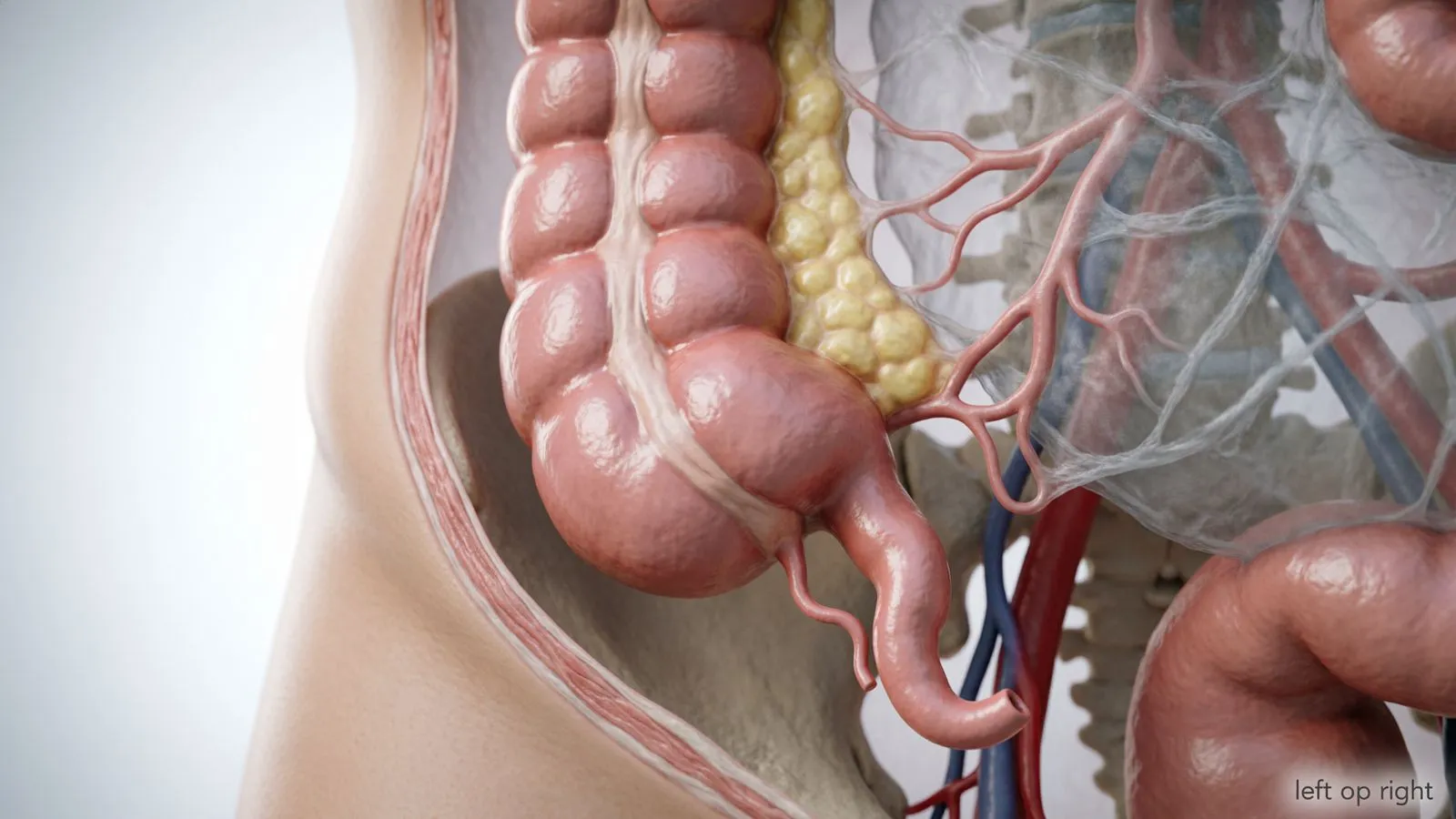
Your appendix is usually on the lower-right side of your abdomen. Appendicitis occurs when it becomes inflamed, often causing pain that starts near the belly button and moves right. It needs prompt medical attention because the appendix can burst and spread infection.
Quick Answer:
The appendix is a small pouch attached to the large intestine. Its position and symptoms can
vary, so persistent or worsening abdominal pain needs medical assessment.
Symptoms of Appendicitis
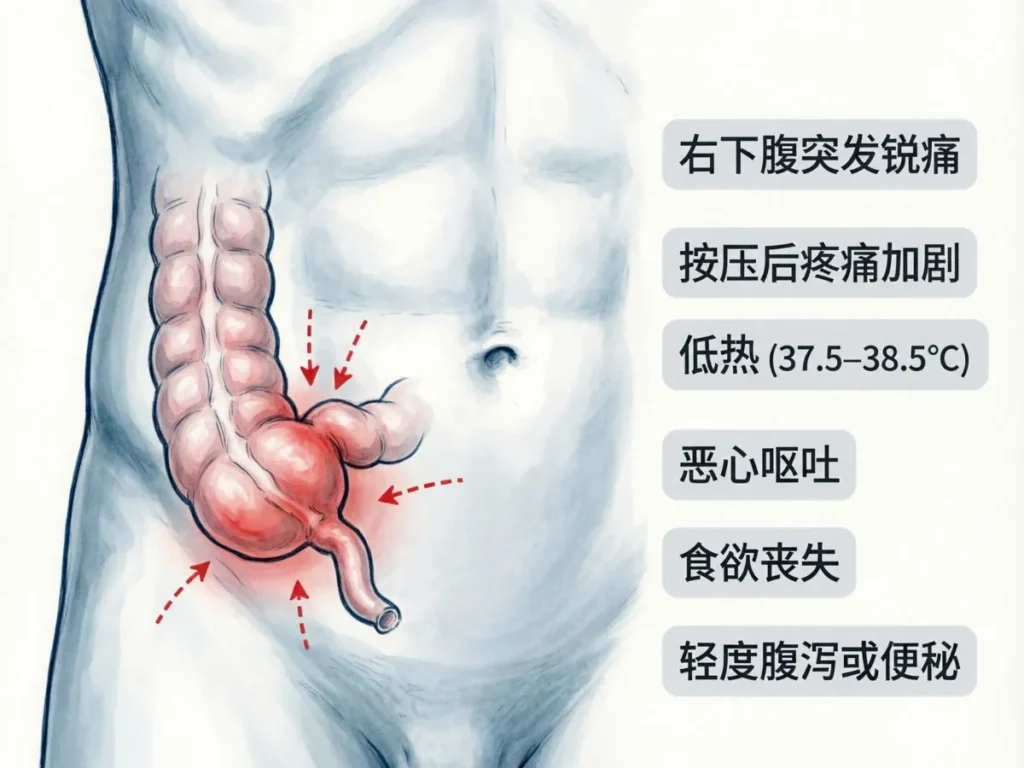
Pain often begins around the belly button, moves to the lower right and worsens over several hours. Walking, coughing or moving may make it worse. Other symptoms include:
- Nausea or vomiting
- Loss of appetite
- Fever
- Constipation or diarrhoea
- Urinating more often than usual
Symptoms may be less typical in children, older adults and pregnant people. Older adults may also develop sudden confusion.
When to Get Urgent Help
An untreated appendix can burst. Pain may briefly ease, then become severe and spread across the abdomen. A rupture can cause peritonitis, an abscess, sepsis or bowel blockage.
Seek urgent care if pain worsens, persists or moves to the lower right. Severe pain, confusion, pale or blotchy skin, or difficulty breathing may signal an emergency. Call your local emergency number.
How Is Appendicitis Diagnosed?
Doctors may examine your abdomen and order blood or urine tests, an ultrasound or CT scan. A pregnancy test may be needed. No test detects every case, so doctors may monitor symptoms in hospital if the diagnosis is unclear.
Treatment and Recovery
Treatment usually involves surgery to remove the appendix, using keyhole or open surgery. If it has burst, doctors may clean the infected area and give antibiotics. Antibiotics alone may suit selected patients when infection has not spread and surgery carries greater risk. An appendix mass may be treated with antibiotics first, with surgery considered later.
Many people recover within one to two weeks, but recovery may take longer after rupture. Follow advice about wound care, activity and driving. Drink fluids, eat fibre if constipated, and finish prescribed antibiotics.
Complications can include wound infection, bleeding, an abscess and, rarely, bowel blockage or stump appendicitis. Seek medical advice if wound redness or pain worsens, pus or bleeding appears, or you develop a fever.
Other Possible Causes
Other causes include urinary tract infections, kidney or gallstones, IBS, Crohn’s disease, pelvic inflammatory disease, ovarian cysts and ectopic pregnancy. Do not self-diagnose; these conditions need different treatment.
FAQs
Can the appendix be on the left?
It is usually on the right, but uncommon anatomical variations can change its position.
Does appendicitis always start on the right?
No. Pain often starts near the belly button before moving to the lower right.
Can appendicitis go away on its own?
Do not assume it will. It can worsen or rupture, so prompt medical assessment is important.
When should I seek help?
Get urgent care for persistent or worsening abdominal pain. Severe pain or possible signs of sepsis require emergency help.
Conclusion
The appendix is usually in the lower-right abdomen, and appendicitis often causes pain that moves there from the belly button. Symptoms vary, and other conditions can cause similar pain. Seek prompt care for persistent or worsening abdominal pain.
Related Articles
- Donor’s Cost or Adjusted Basis: What Should You Report?
- Callus or Wart on Foot? How to Tell the Difference
- Faced vs. Unfaced Insulation: Which Should You Use?

Bryan Garner an experienced English language writer specializing in grammar, usage, word choice, and clear American English. He focuses on making complex language rules simple, accurate, and practical.
 Mignon Fogarty
 William Strunk