
Choosing between afterward and afterwards is simple once you know their usage. Both spellings are correct and mean “later” or “after that.” The main difference is regional preference: Americans generally favor afterward, while British writers often use afterwards.
Quick Answer: Afterward or Afterwards?
Both words have the same meaning and grammatical function. Afterward is more common in American English, while afterwards is more common in British English. Both are correct in either variety.
| Word | Common Preference | Meaning |
| Afterward | American English | Later; after that |
| Afterwards | British English | Later; after that |
What Does Afterward Mean?
Afterward is an adverb that describes something happening after an earlier event.
Examples:
- We finished dinner and watched a movie afterward.
- She called me shortly afterward.
- He apologized afterward for his mistake.
It can appear at the beginning or end of a sentence. Use a comma when it starts a sentence.
Example: Afterward, everyone returned to work.
When Should You Use Afterwards?
Afterwards has the same meaning and grammatical use as afterward. It is more common in British English and other varieties outside North America.
Examples:
- We visited the museum afterward.
- We visited the museum afterwards.
Both sentences are correct. Choose the spelling that suits your audience.
Afterward vs. Afterwards: American vs. British English
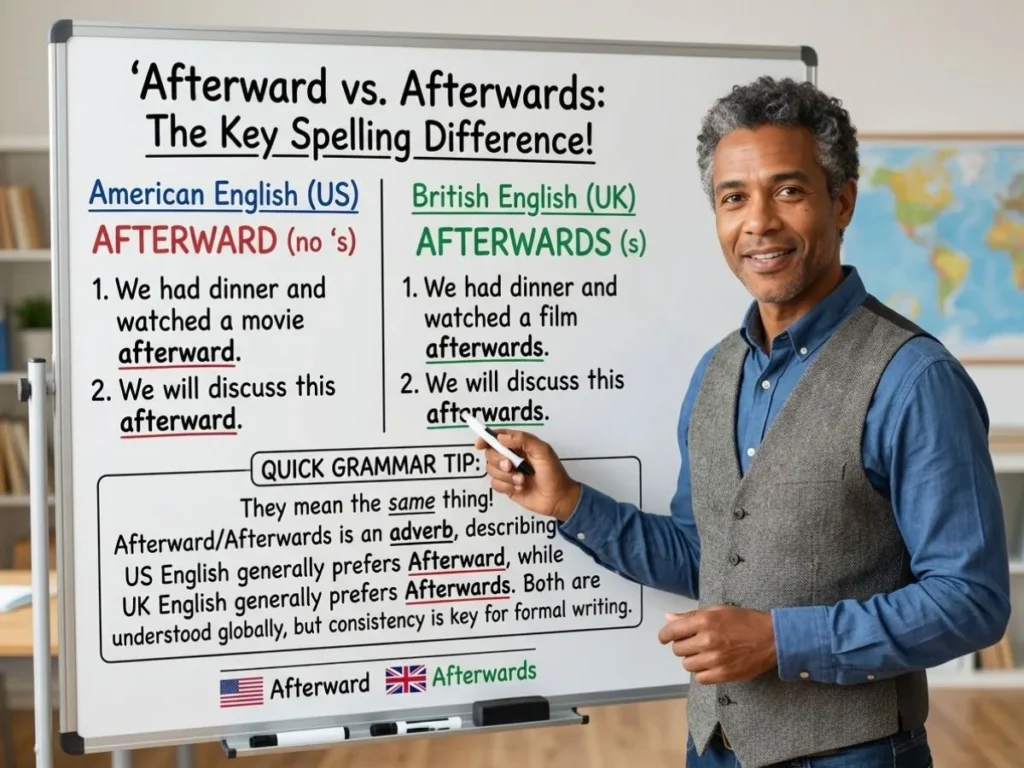
Both spellings are accepted in American and British English, but regional preferences differ.
- American English: Afterward is preferred, but afterwards is also correct.
Example: We went shopping afterward. - British English: Afterwards is preferred, but afterward is also correct.
Example: We went shopping afterwards.
Remember: Neither spelling is wrong. Choose the form that fits your audience and use it consistently.
After vs. Afterward: What’s the Difference?
After introduces an event or time, while afterward refers to something that happens later.
Examples:
- We went home after dinner.
- We had dinner and went home afterward.
Remember: Use after to name the event and afterward to refer back to it.
Afterward vs. Afterword: Don’t Mix Them Up
These words look similar but have different meanings.
- Afterward: An adverb meaning later or after that.
- Afterword: A section at the end of a book containing additional comments or reflections.
Example: The author explained the inspiration behind the novel in the afterword.
FAQs
Is afterwards correct in American English?
Yes. Afterwards is accepted in American English, although afterward is more common.
Which spelling is better for formal writing?
Both are correct. American publications generally prefer afterward, while British publications often use afterwards. Follow your publication’s style guide.
Conclusion
Both afterward and afterwards are correct and mean the same thing. Choose the spelling that suits your audience, use it consistently, and don’t confuse either word with afterword.
Related Articles
- Writing or Writting: Which Spelling Is Correct?
- Writing or Writting: Which Spelling Is Correct?
- Trash vs. Garbage: Meaning, Differences, and Examples

Bryan Garner an experienced English language writer specializing in grammar, usage, word choice, and clear American English. He focuses on making complex language rules simple, accurate, and practical.
 Mignon Fogarty
 William Strunk