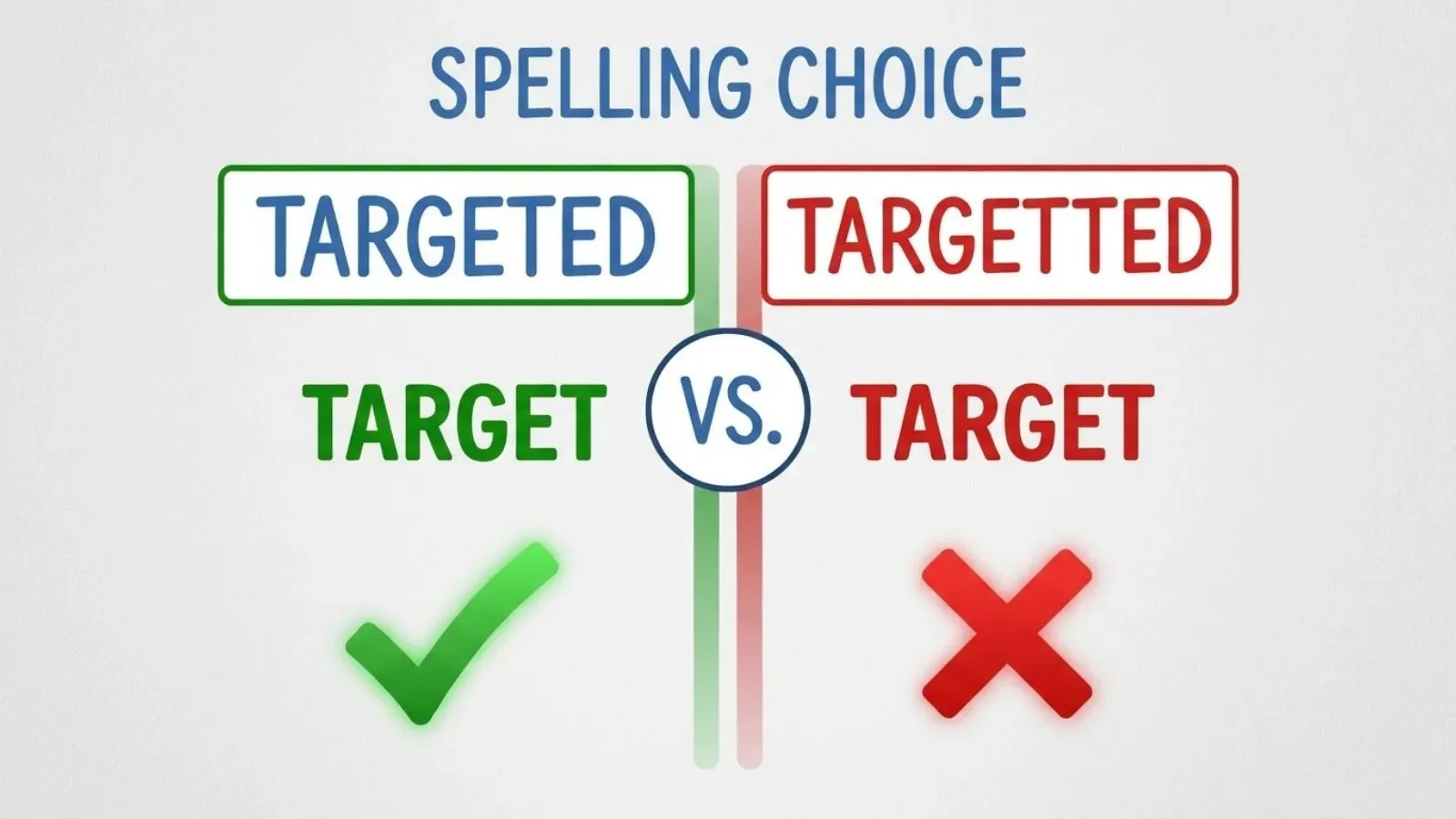
Targeted is the correct spelling in both American and British English. Targetted is a common misspelling caused by confusion about when to double a final consonant. The difference becomes clear when you look at the word’s meaning, pronunciation, and spelling pattern.
Quick Answer: Targeted or Targetted?
- Targeted: Correct spelling.
- Targetted: Incorrect spelling.
- Targeting: Correct -ing form.
- Targetting: Incorrect -ing form.
Use targeted for something aimed at a particular person, group, or objective. Use targeting for an action that is happening or continuing.
What Does Targeted Mean?
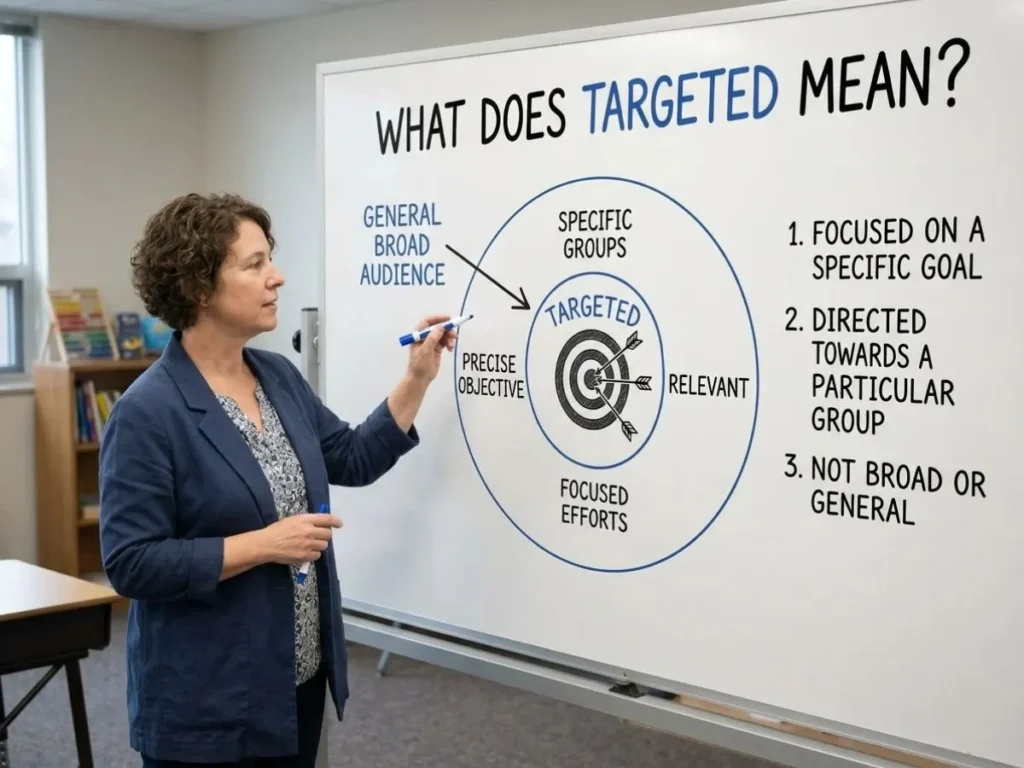
Targeted is the past tense and past participle of the verb target. It can also work as an adjective. It means aimed at, directed toward, or designed for a particular person, group, place, or purpose.
For example, a business may run a targeted campaign for local customers. This means the campaign is designed to reach a specific audience rather than everyone.
Why Is Targeted Spelled With One T?
English doubles a final consonant before -ed or -ing in certain verbs. This usually happens when a verb ends in one consonant preceded by one vowel and its final syllable is stressed. For example, admit becomes admitted and admitting.
The stress pattern explains why target is different. It has two syllables, pronounced TAR-get, with the stress on the first syllable. Since the final syllable is unstressed, the last “t” does not double.
The correct forms are:
- Target + ed = Targeted
- Target + ing = Targeting
Therefore, targetted and targetting are not standard spellings.
Targeted in American and British English
There is no spelling difference between American and British English for this word. Both varieties use one “t” in targeted and targeting.
American English: The company launched a targeted campaign for local customers.
British English: The council introduced targeted support for families in need.
Targeted vs. Targetted: Common Spelling Mistakes
| Form | Status |
| Targeted | Correct |
| Targetted | Incorrect |
| Targeting | Correct |
| Targetting | Incorrect |
| Targeted audience | Correct |
| Targetted audience | Incorrect |
Examples of Targeted in Sentences
- The school introduced targeted support for students who needed extra help.
- The marketing team created targeted ads for a younger audience.
- Investigators targeted several locations during the operation.
- This email is targeted at customers who recently purchased a product.
- Doctors recommended targeted treatment for the patient’s condition.
Other Verbs That Show the Doubling Rule
These examples show how syllable stress affects the final consonant:
- Get → getting: The final “t” doubles.
- Admit → admitted: The final “t” doubles because the last syllable is stressed.
- Visit → visiting: The final “t” stays single because the last syllable is unstressed.
- Target → targeting: The final “t” also stays single because the last syllable is unstressed.
FAQs
1. Is targeted spelled with one T or two?
Targeted is spelled with one “t” after the “e.” The spelling targetted is incorrect in standard English.
2. Is it targeting or targetting?
Targeting is the correct -ing form. The final “t” stays single because the stress in target falls on the first syllable.
3. Is targeted the same in American and British English?
Yes. Both American and British English use targeted and targeting. There is no regional spelling difference.
Conclusion
Targeted is correct in both American and British English; targetted is nonstandard. Remember the stress in TAR-get: the final syllable is unstressed, so the “t” stays single before -ed and -ing.
Related Articles
- Reinforce vs. Reenforce: Which Spelling Is Correct?
- Or vs. Nor: Difference, Rules, and Examples
- Than or Then: What’s the Difference? Rules and Examples

Mignon Fogarty is an experienced English grammar and writing expert specializing in grammar, word usage, and clear American English. At EduNexxt, her focus is making grammar simple, accurate, and practical.
 Bryan Garne
 William Strunk