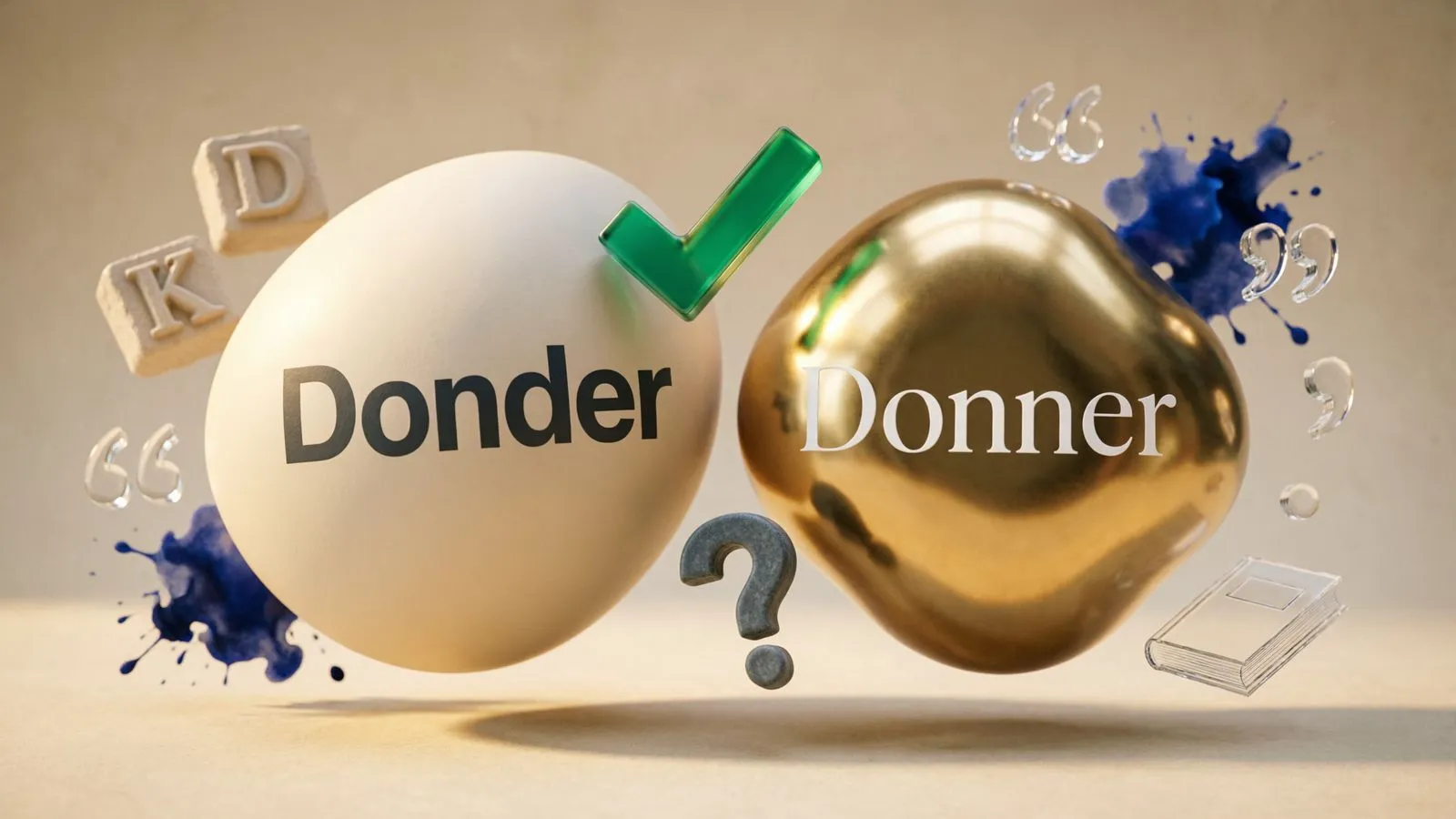
Have you ever seen Santa’s reindeer listed as Donder in one place and Donner in another? The confusion is understandable. Both names refer to the same reindeer, but Donner is the spelling most people recognize today.
Donder belongs to an older version of the Christmas tradition, and the story actually goes back to an even earlier name.
Quick Answer:
For modern English, Donner is the spelling to use. Donder is an older form, while Dunder appeared in the original 1823 publication of A Visit from St. Nicholas.
Comparison Table
| Spelling | Common Use | Historical Context |
| Donner | Modern spelling | Popular Christmas culture |
| Donder | Older spelling | Later poem versions |
| Dunder | Original spelling | 1823 publication |
Why Is It Donder or Donner?
The reindeer did not always have the same name. In the first published version of the poem in 1823, the final pair were Dunder and Blixem. Later versions changed the names to Donder and Blitzen.
So, Donder was not the original spelling.
When Did “Donner” Become Popular?
Over time, later editions, adaptations, and popular Christmas entertainment favored Donner. The 1949 song Rudolph the Red-Nosed Reindeer helped make Donner and Blitzen especially familiar to modern audiences.
That is why Donner is now the spelling most readers expect.
What Do the Names Mean?
The names have a connection to storms. German Donner means “thunder,” while Blitzen means “lightning.” The older form Donder is associated with Dutch.
Is Donner Really Donder’s Nickname?
Some Christmas websites tell a playful story in which Donder is the reindeer’s proper name and Donner is his nickname. These stories may be fun to read, but they are Christmas folklore rather than the documented historical reason for the spelling change.
The historical record shows that the name changed across different versions and later adaptations.
When to Use Each
For modern Christmas writing, Donner is the standard choice.
In older versions of the poem, you may see Donder.
The original 1823 version uses Dunder.
Common Mistake
The most common mistake is assuming that Donder was the original name and Donner is simply a nickname. The earliest published version actually used Dunder.
Pronunciation
- Donner: roughly DAH-nər
- Donder: roughly DAHN-dər
- Dunder: roughly DUHN-dər
The exact sound may vary with accent.
Examples
- Donner is one of Santa’s best-known reindeer.
- Donder appears in older versions of the Christmas poem.
- The original 1823 text used Dunder.
- Modern Christmas songs use Donner and Blitzen.
- Donder is an important part of the name’s history.
- Donner is the spelling most readers recognize today.
Memory Trick
Think of the name as a simple timeline:
Dunder → Donder → Donner
Original form → older variant → modern spelling.
Mini Quiz
- Which spelling is most common today?
- What spelling appeared in the original 1823 poem?
- Which form appeared in later versions?
- What does German Donner mean?
- Which pair is used in the familiar modern version?
Answers: 1. Donner 2. Dunder 3. Donder 4. Thunder 5. Donner and Blitzen
FAQs
Is it Donder or Donner?
Both have historical use, but Donner is the usual modern spelling.
What was the original spelling?
The 1823 poem used Dunder.
Why did Donder become Donner?
The name changed through later editions and popular adaptations, with Donner eventually becoming the familiar form.
Does Donner mean thunder?
Yes. In German, Donner means “thunder.”
Conclusion
Donner is the standard modern spelling, while Donder is an older form. The story starts with Dunder in the original 1823 poem, moves through Donder in later versions, and eventually settles on the familiar Donner.
Knowing that history makes the three spellings much easier to understand.
Related Articles
- Hear Hear or Here Here: Which Is Correct (2026)?
- Too Much to Bear or Bare: Which Is Correct?
- Beg Borrow or Steal: Meaning, Usage & Examples

William Strunk is a respected authority on English grammar, usage, and writing style, known for his influential work The Elements of Style. At EduNexxa, his focus is on clear, concise, and effective English.
 Bryan Garne
 Mignon Fogarty