Bologna and baloney sound almost identical, but they do not always mean the same thing. Bologna is the standard word for the sausage, while baloney usually means nonsense or foolish talk.
In informal American English, however, baloney can also refer to the sausage. That double meaning is what makes these two words so easy to confuse.
Quick Answer:
Bologna is a cooked, smoked sausage usually sliced for sandwiches. Baloney commonly means nonsense, but it can also be an informal name for bologna. So, “I had a bologna sandwich” refers to food, while “That’s baloney” means “That’s nonsense.”
Bologna vs. Baloney
| Word | Meaning | Example |
| Bologna | Cooked, smoked sausage | I made a bologna sandwich. |
| Baloney | Nonsense or foolish talk | That story is baloney. |
| Baloney | Informal name for the sausage | He ordered a baloney sandwich. |
Where Does Bologna Come From?
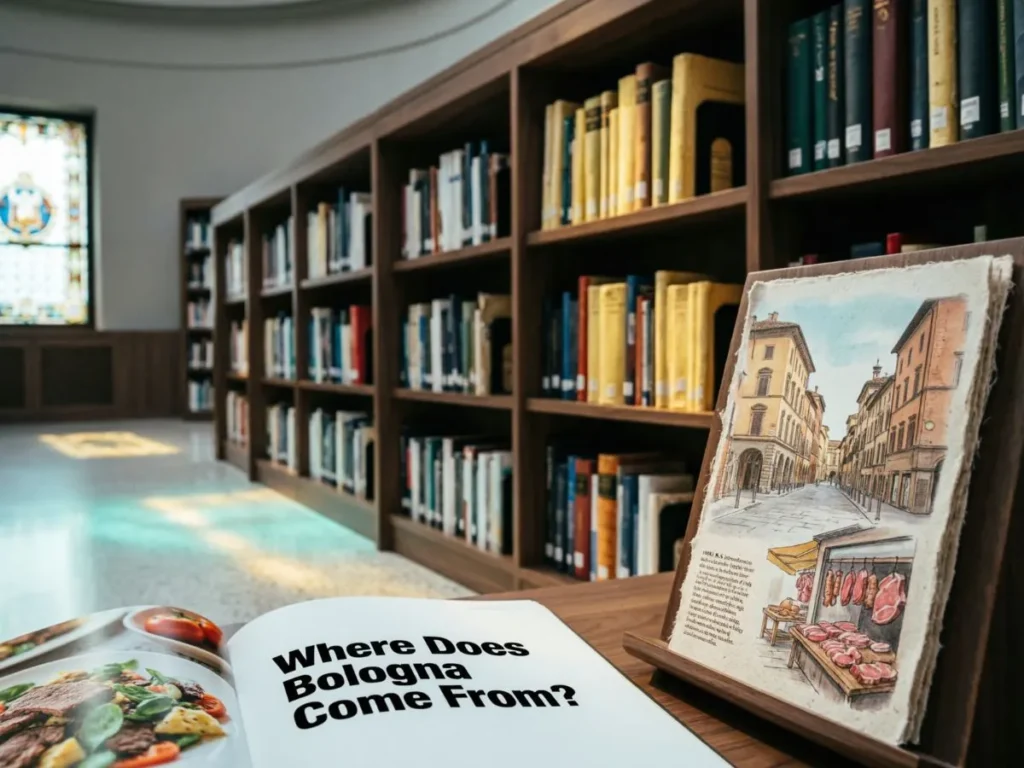
The name bologna is connected to Bologna, Italy, where mortadella, a traditional Italian sausage, originated. American bologna is similar to mortadella but became a familiar, inexpensive sliced lunch meat in the United States.
The sausage is known by different names in different places. For example, a version in Newfoundland is called Newfie Steak, while a similar British sausage is known as polony.
How Did Baloney Mean Nonsense?
The exact origin of baloney in the sense of “nonsense” is uncertain. One theory connects it to bologna, perhaps because of the sausage’s reputation as inexpensive or made from various meat trimmings. Another theory links it to blarney, meaning flattering, deceptive, or nonsensical talk.
The slang meaning became especially noticeable in American public speech during the 1930s, when New York governor Alfred E. Smith famously used baloney when criticizing government bureaucracy.
Whatever its exact origin, baloney is now a genuine English word, not merely a misspelling of bologna.
Common Mistakes
The biggest mistake is assuming that baloney is always wrong. It is perfectly correct when you mean nonsense and can also be used informally for the sausage.
For standard writing about the food, however, bologna is the safer choice.
Pronunciation
In American English, the sausage bologna and baloney are pronounced alike: /bəˈloʊ.ni/. The Italian city Bologna has a different pronunciation.
Examples
- We packed bologna sandwiches for lunch.
- That explanation sounds like baloney.
- She bought sliced bologna at the deli.
- I don’t believe his story; it’s pure baloney.
- He grew up eating baloney sandwiches.
- The politician dismissed the claim as baloney.
Memory Trick
Think Bologna = the food and baloney = nonsense.
If you can put it between two slices of bread, think bologna. If you are calling an unbelievable story nonsense, think baloney.
Mini Quiz
- Which spelling is standard for the sausage?
- Which word means nonsense?
- Can baloney also mean sausage?
- Is baloney simply a misspelling?
- Are the two words pronounced alike in American English?
Answers: 1. Bologna 2. Baloney 3. Yes 4. No 5. Yes
FAQs
Is bologna the same as baloney?
They can refer to the same sausage, but baloney also means nonsense or foolish talk.
Why is bologna pronounced like baloney?
The English food word has an established pronunciation that differs from its spelling and matches baloney in American English.
Does baloney mean nonsense?
Yes. In informal English, baloney commonly means nonsense or foolish talk.
Which spelling should I use?
Use bologna for the sausage in standard writing and baloney when you mean nonsense.
Conclusion
Bologna and baloney overlap when they refer to the sausage, but they are not interchangeable in every context. Bologna is the standard food spelling, while baloney usually means nonsense.
Remember the simple distinction: bologna goes in the sandwich; baloney describes the story you do not believe.
Related Articles
- Too Much to Bear or Bare: Which Is Correct?
- Glass Half Full or Half Empty? Meaning & Difference
- Hear Hear or Here Here: Which Is Correct (2026)?

Bryan Garner an experienced English language writer specializing in grammar, usage, word choice, and clear American English. He focuses on making complex language rules simple, accurate, and practical.
 Mignon Fogarty
 William Strunk