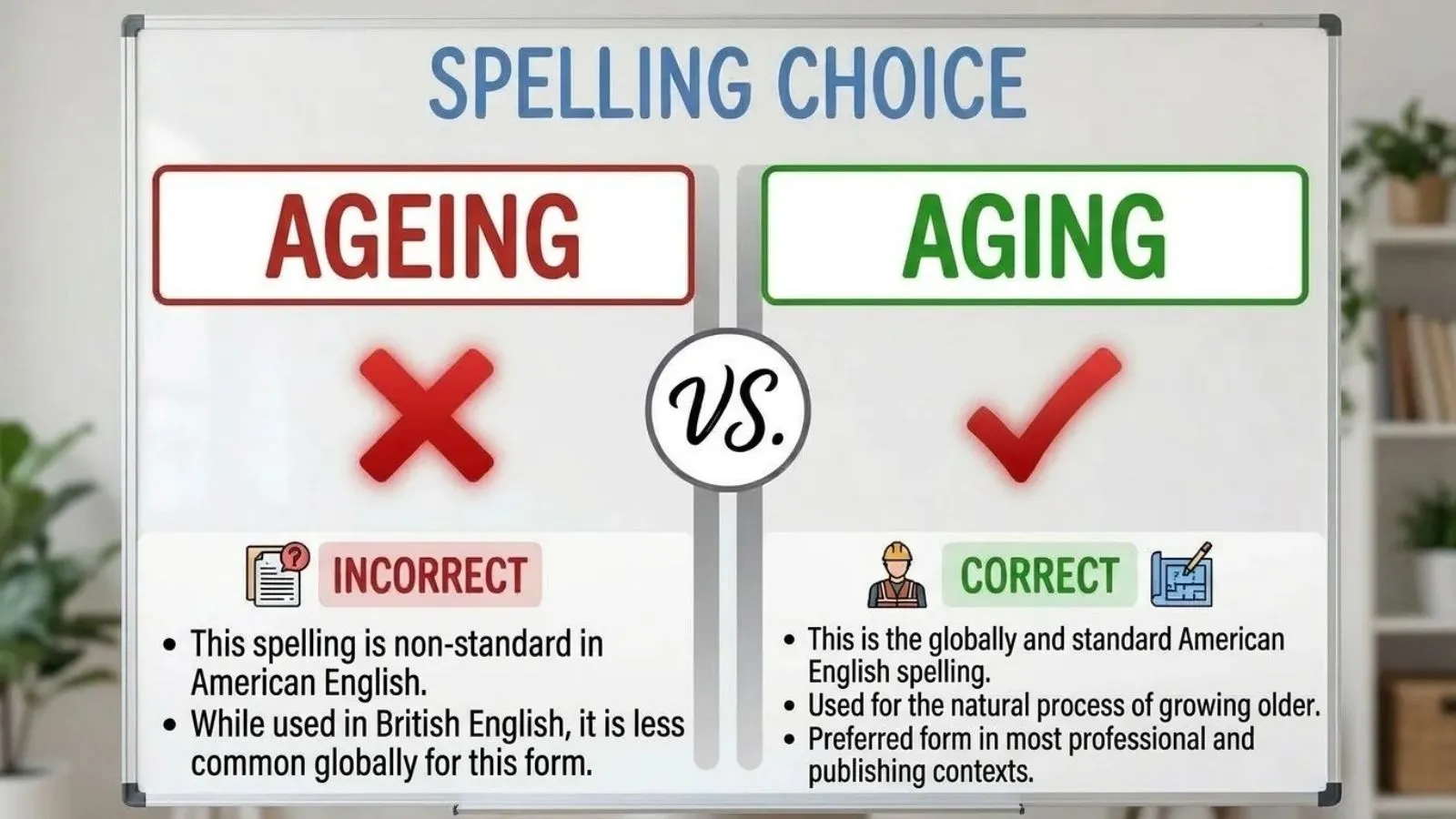
Ageing and aging are both correct spellings of the same word. The difference is regional: aging is standard in American English, while ageing is preferred in British English and several other varieties. Both describe growing older or becoming less new over time.
Quick Answer:
Use aging for a US audience and ageing for a UK audience. The meaning and pronunciation do not change. Choose the spelling that matches your readers and use it consistently.
What Do Ageing and Aging Mean?
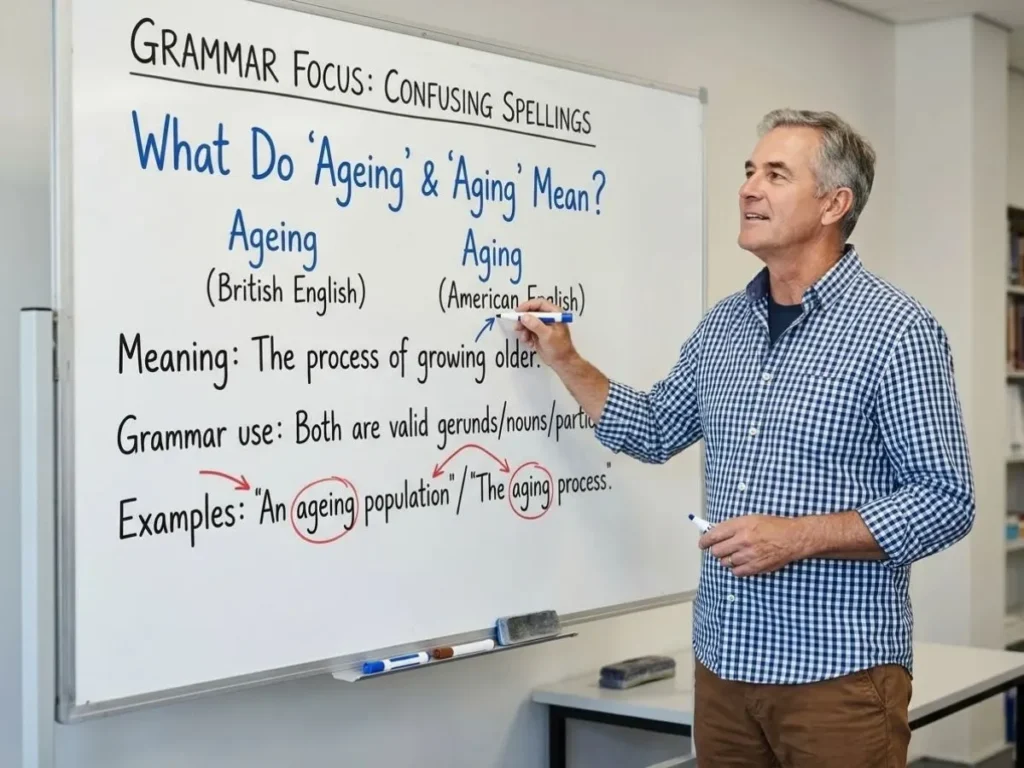
Ageing or aging describes the process of getting older. It can refer to people, animals, populations, buildings, equipment, food, or other things that change over time. Depending on the sentence, it can work as a noun, an adjective, or the present participle of the verb age.
- As a noun: “Aging is a natural part of life.”
- As an adjective: “The city is repairing its ageing infrastructure.”
- As a verb form: “The population is aging rapidly.”
The spelling follows the same regional preference in all three uses.
Ageing vs. Aging: What’s the Difference?
The difference is spelling rather than meaning. American English usually drops the final e from age before adding -ing, giving aging. British English generally keeps the e in this word, giving ageing.
| Feature | Aging | Ageing |
| Main variety | American English | British English |
| Meaning | Growing older | Growing older |
| Pronunciation | Same | Same |
| Example | Aging population | Ageing population |
Both forms are understood internationally, but using the expected regional spelling makes your writing more consistent.
British vs. American English: Which One Should You Use?
- American English: Aging is the standard form. Example: “The aging population needs better healthcare.”
- British English: Ageing is the preferred form. Example: “The ageing population needs better healthcare.”
You may also see anti-aging in US writing and anti-ageing in UK writing, especially in product descriptions. Some publishers follow their own house style, so check the style guide when writing for a specific publication.
Common Uses and Related Words
These examples show how the word appears in different contexts:
- People: “The effects of aging can vary from person to person.”
- Infrastructure: “The council plans to replace ageing water pipes.”
- Products: “The label explains how to prevent premature aging.”
- Food and drink: “The cheese improves with ageing.”
Possible alternatives include growing older when discussing people, maturing for development, and deteriorating when something is becoming worse. These are not exact substitutes in every sentence, so choose one that fits the intended meaning.
FAQs
Is ageing or aging correct?
Both are correct. Aging is the standard American spelling, while ageing is preferred in British English.
Why does ageing keep the e?
It is a conventional British spelling. Although the final e is usually dropped before -ing, ageing retains it in standard British usage.
Do ageing and aging have different pronunciations?
No. Both are pronounced the same way and have the same meaning.
Conclusion
Use aging in American English and ageing in British English. Both spellings are correct; the best choice depends on your audience and consistent regional style.
Related Articles
- Opened or Openned: Which Spelling Is Correct?
- Targeted or Targetted: Which Spelling Is Correct?
- Fairing vs. Faring: Meaning, Differences & Examples

Mignon Fogarty is an experienced English grammar and writing expert specializing in grammar, word usage, and clear American English. At EduNexxt, her focus is making grammar simple, accurate, and practical.
 Bryan Garne
 William Strunk