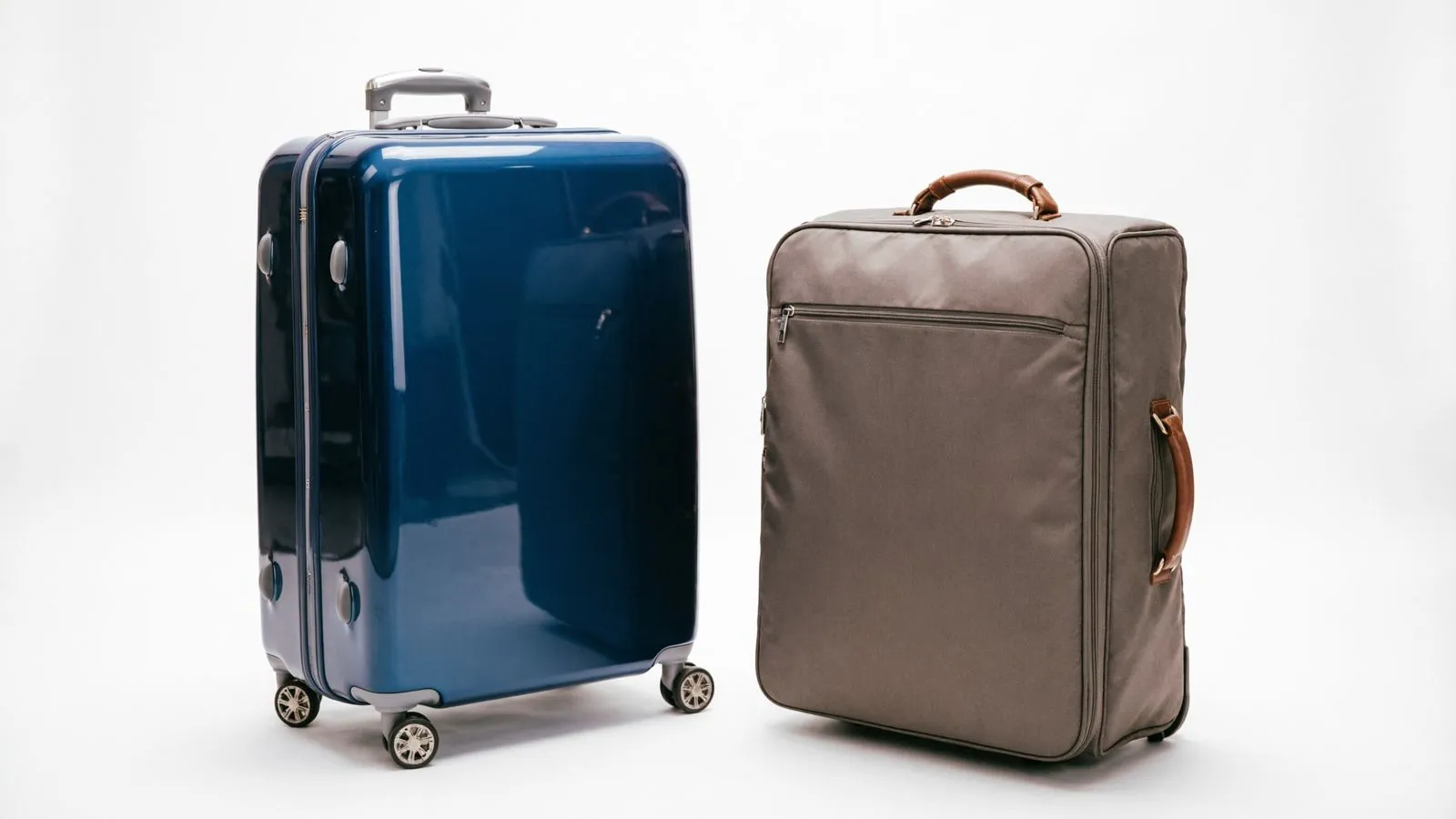
Choosing hard or soft luggage comes down to what you pack, how you travel, and how much flexibility you need. Hard luggage offers a rigid shell for protecting belongings, while soft luggage provides flexible packing, external pockets, and easier access. The best choice depends on the suitcase’s actual features, not just its appearance.
Quick Answer: Hard vs. Soft Luggage
Choose hard luggage for fragile belongings, easy cleaning, and structured packing. Choose soft luggage for external pockets, flexible storage, and quick access to essentials. For either type, check the wheels, handles, zippers, weight, and repair options before buying.
Hard or Soft Luggage: Key Differences
| Feature | Hard Luggage | Soft Luggage |
| Protection | Rigid shell helps resist pressure | Fabric offers less protection against crushing |
| Packing | Structured compartments | Flexible shape and external pockets |
| Weather | Usually easier to wipe clean | Water resistance depends on fabric and coating |
| Storage | Needs room to open and store | Often easier to fit into tight spaces |
| Common damage | Cracks, dents, scuffs | Torn fabric, seams, or zippers |
When Should You Choose Hard Luggage?
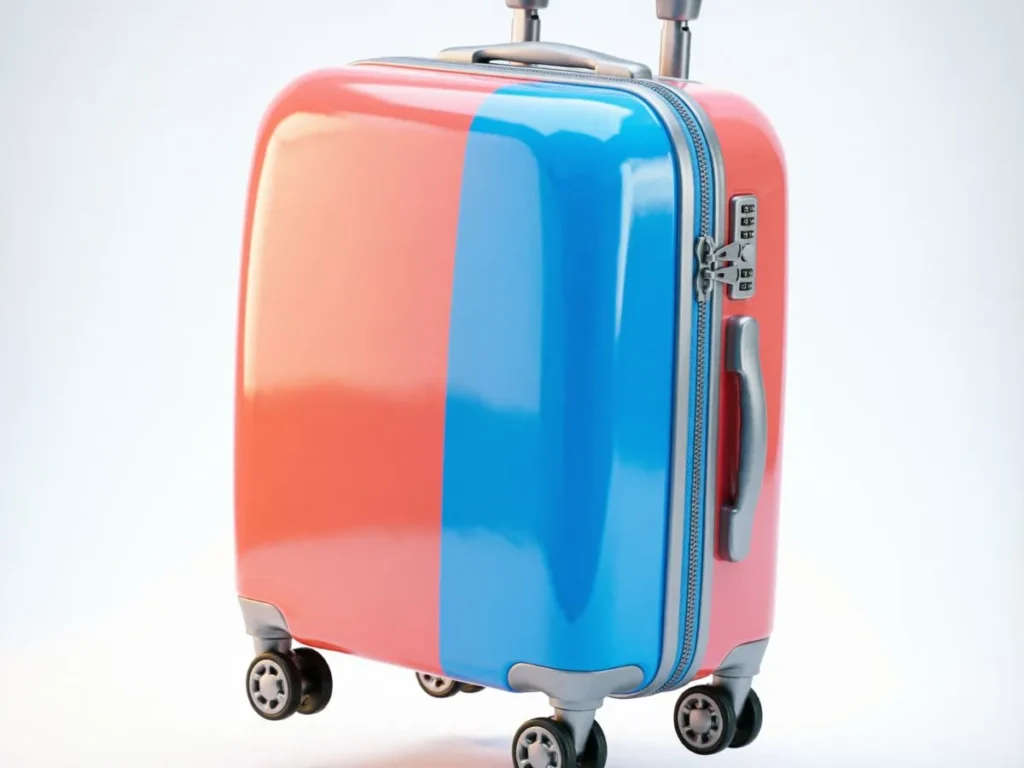
Hard-shell suitcases suit travelers carrying fragile souvenirs, electronics, or items that benefit from a rigid exterior. Their smooth surfaces are usually easy to wipe clean, and their fixed shape helps keep dimensions predictable.
Material matters. Polycarbonate can flex under impact, polypropylene is often chosen for lightweight designs, and ABS is common in budget-friendly cases. However, shell thickness and overall construction also affect performance. A hard shell is not automatically waterproof or theft-proof. <Cite refs={[“turn800547view0”]}/>
Best for: Fragile items, checked baggage, and travelers who prefer structured packing.
When Is Soft Luggage the Better Option?
Soft-sided suitcases are useful when you need quick access to chargers, documents, or travel essentials. External pockets reduce the need to open the entire bag, while flexible sides and expansion sections can accommodate extra purchases.
The trade-off is less protection against crushing and possible moisture penetration. Overpacking can also push a soft suitcase beyond permitted dimensions.
Best for: Business trips, road trips, frequent carry-on travel, and travelers who value accessible pockets.
Which Type Lasts Longer?
Neither type automatically lasts longer. Hard shells can crack, while soft cases can develop torn seams and damaged zippers. Wheels, handles, stitching, and attachment points matter just as much as the outer material.
Before buying, check whether replacement wheels and handles are available, what the warranty covers, and whether local repair services can fix common damage. A suitcase that is easier to repair may offer better long-term value than one with a higher price or more premium finish.
What Should You Check Before Buying?
- Airline limits: Airlines set their own baggage allowances. Measure the suitcase with wheels and handles included, and check the rules for every airline on your itinerary. <Cite refs={[“turn800547view1”]}/>
- Empty weight: A lighter suitcase leaves more of your baggage allowance for belongings.
- Opening space: Hard cases that open in two halves need more floor space; many soft cases have a single main compartment.
- Repairability: Check replacement parts, zipper quality, warranty coverage, and repair costs before paying more.
Conclusion
Hard luggage provides structure and protection, while soft luggage offers flexibility and convenient access. Compare materials, empty weight, airline restrictions, and repair options before choosing. The right suitcase is the one that fits your travel habits and budget.
Related Articles
- Blink vs. Ring: Which Security Camera Is Better in 2026?
- Metric vs. Imperial: Differences, Examples & Conversions
- Carvana vs. CarMax: Which Is Better for Buying or Selling?

Bryan Garner an experienced English language writer specializing in grammar, usage, word choice, and clear American English. He focuses on making complex language rules simple, accurate, and practical.
 Mignon Fogarty
 William Strunk