
Advil and Aleve both relieve pain, inflammation, and fever, but they contain different medicines. Advil contains ibuprofen and usually needs more frequent doses, while Aleve contains naproxen sodium and lasts longer. Your symptoms, medical history, and other medicines matter when choosing between them.
Advil vs. Aleve: Key Differences
| Feature | Advil | Aleve |
| Active ingredient | Ibuprofen | Naproxen sodium |
| Drug class | NSAID | NSAID |
| Common uses | Headaches, cramps, muscle aches, fever | Headaches, cramps, muscle aches, arthritis |
| Typical adult OTC interval | Every 4–6 hours | Every 8–12 hours |
| Standard OTC tablet | 200 mg | 220 mg |
Both are nonsteroidal anti-inflammatory drugs (NSAIDs). They reduce pain and inflammation and may help with headaches, toothaches, back pain, menstrual cramps, sprains, and arthritis. Neither works best for everyone.
Which Is Better for Different Types of Pain?
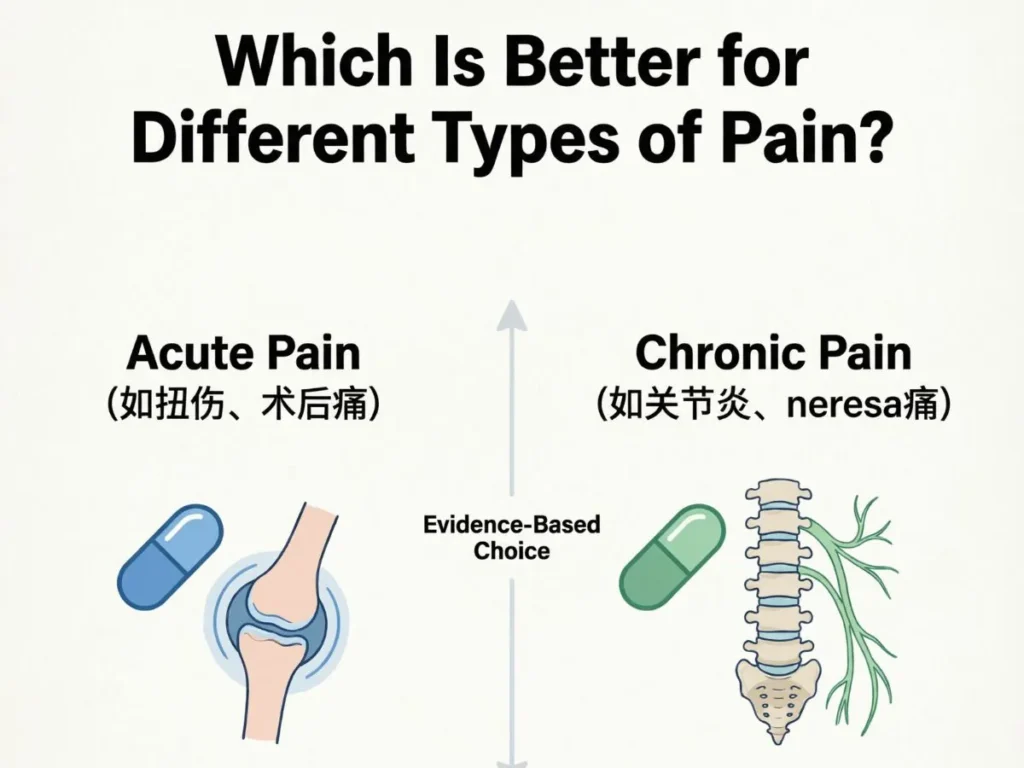
- Headache or fever: Either may help when used as directed.
- Menstrual cramps: Both can reduce pain and inflammation.
- Muscle aches or back pain: Either may help short-term symptoms.
- Arthritis: Both may ease pain and swelling, but ongoing symptoms need medical advice.
Aleve may be more convenient for longer-lasting relief, while Advil allows more frequent dosing. Neither is automatically stronger or safer.
Dosage: What Adults Should Know
For standard US over-the-counter products, adults and children aged 12 and older should follow the package directions.
- Advil: Take 200 mg every 4–6 hours as needed. If one tablet does not help, the label permits two. Do not exceed six 200 mg tablets in 24 hours unless directed by a healthcare professional.
- Aleve: Take one 220 mg tablet every 8–12 hours. The first dose may be two tablets within the first hour. Do not exceed two tablets in any 8–12-hour period or three tablets in 24 hours.
Use the lowest effective dose for the shortest time. Seek medical advice if pain lasts more than 10 days or fever lasts more than three days.
Side Effects and Safety Warnings
Both medicines can cause heartburn, stomach ulcers, gastrointestinal bleeding, kidney problems, fluid retention, and higher blood pressure. They may also increase heart attack and stroke risk, especially with higher doses or prolonged use.
Consult a healthcare professional before using either if you have heart or kidney disease, high blood pressure, a history of ulcers or bleeding, or take blood thinners, steroids, certain antidepressants, or other NSAIDs. Avoid either if you have had an allergic reaction to aspirin or another NSAID. Alcohol can increase stomach-bleeding risk.
Food may reduce stomach discomfort but does not prevent serious bleeding. Get emergency help for chest pain, difficulty breathing, one-sided weakness, or slurred speech.
For pregnancy, consult a healthcare professional before taking either medicine. The FDA advises avoiding NSAIDs from around 20 weeks of pregnancy unless specifically directed by a clinician.
Safety references: Official Advil product information, Official Aleve product information, and FDA pregnancy guidance.
Can Children Take Advil or Aleve?
Advil has children’s formulations, with dosing based on age, weight, and product instructions. Standard OTC Aleve is labeled for ages 12 and older. Ask a pediatric healthcare professional if unsure, and never give a child an adult dose.
Can You Take Advil and Aleve Together?
No, unless a healthcare professional specifically directs you to. Combining these NSAIDs increases side-effect risks without reliably improving pain relief. Check cold and pain medicines for duplicate ingredients.
Conclusion
Advil is usually taken more frequently, while Aleve lasts longer. Both can relieve common pain, but neither is safest for everyone. Check the label, consider your medical history, and seek advice if symptoms persist.
Related Articles
- Appendix Left or Right? Location, Pain and Warning Signs
- Optometrist vs. Ophthalmologist: Differences and Which to See
- Cold Sore vs. Canker Sore: Key Differences and Treatment

Bryan Garner an experienced English language writer specializing in grammar, usage, word choice, and clear American English. He focuses on making complex language rules simple, accurate, and practical.
 Mignon Fogarty
 William Strunk